

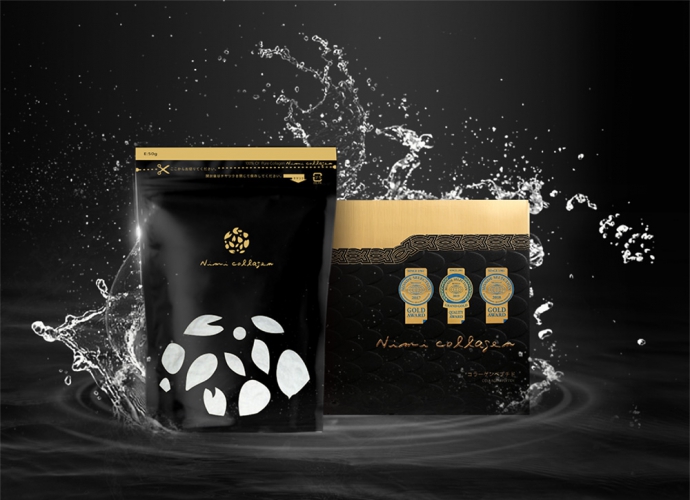
Collagen peptide is a high molecular bio substance that is found in the human body and it is the main structure of connective tissues. It is white in color, non-transparent, non-branching protein. It is used to replenish the store within the body to promote skin health from the cellular level, increase bio-activities of collagen within the body to promote healthy looking and vibrant skin, delay signs of aging by increasing elasticity of your skin and moisture content as well as giving your hair and nail the shine that looks so youthful.
As we age, collagen is naturally deplete through natural oxidation from normally cellular functions and external forces in the environment, however the production within the body is not always going to be the same, at the age of 20 depletion rate starts to accelerate and hitting the peak at the age of 25 where your production is now on par with the rate of depletion. By the age of 30 it’s all down hills and finally at 40 you pretty much stop producing collagen, at 40 your collagen content is about half of that at the age of 18! bit of a shock?
Collagen makes up approximately 70% of the human skin and 80%of the dermis layer is collagen. The wrinkles you see on an aged person’s skin is the result of depletion of collagen finally resulting the the collapse of fibril structures and lost of elasticity in the skin. In Japan and many western countries, supplementing collagen peptide is quite a common theme, even adding it to soup is also a common practice to replenish the forever depleting collagen storage.
Infants 88% or more, adolescent 70% or more, young adult 50% or more, middle age 35% or more, senior 30% or more
The two most bio-active Amino acids are Hydroxy-prolene and Glycine. Hydroxy-prolene is the amino acid that is most beneficial to skin conditions. Most common marine collagen on the market are derived from Cods which in itself is not too bad coming in with Hydroxy-prolene content of 5%, however due to the habitat of the fish which is deep ocean 2-3000m and very low temperature, the collagen has limited absorption rate. Red snappers on the other hand are found at about 200m depth with moderate temperature and the Hydroxy-prolene content is considerably higher at 12.9%. the materials are sourced all over the world and is hydrolyzed by the award winning company Nippi which is also considered the father of the collagen industry.
Most collagen peptide products on the market are about 2-3000Da in molecular weight, in actual fact, the bio-availability and activity is much better if the molecular weight is below 2000Da but it requires a higher level of technology to splice the peptide chain in a certain way. The best absorption molecular molecular weight range is between 1500-3000Da. Anything larger is harder to absorb; anything smaller is unstable through the digestive track. Nimi’s Collagen peptide is at 1500Da taking the best from both absorption rate and stability.
The deeper part of the ocean are barely affected by human activities so the collagen sourced from red snappers can guarantee minimal pollution, increased safety and absorption rate and closer to human’s biological makeups so there is very little allergic reaction possibilities.
Powder form is the best way to preserve collagen peptide also the best way to guarantee highest safety, stability, purity and potency. Products that comes in capsules, tablet and liquid forms are likely to contain additives, preservatives, stabilizers, artificial flavors and endocrine disruptors.
Good collagen oligo-peptide sourced from fresh fish skins or scales should appear white or slightly off-white, odorless with a hint of fishiness. You can place the powder on a sheet of white paper to observe the powder, high quality collagen will appear bright and very close to pure white color. If they appear too white, dull or even very yellowy in color then one can suspect that.
The product may have been bleached or sourced from a low quality origin. Many of these products may have gone through improper processing or simply sourced from a very low quality off-cuts of processing plants.
Smell: good quality collagen peptide has a hint of fishiness like that of fresh fish, the lighter the smell the better the quality usually. If you smell odorous fishiness or artificial fragrances or chemical smells, it usually means the manufactures have sourced a very low quality ingredient ,poorly managed production line and are attempting to mask the odor by adding different chemical substances and flavoring .
High quality collagen peptide powder will dissolve rapidly and effortlessly in water between 45-75 degrees Celsius and the solution will be clear; low quality products will leave sedimentation and will appear cloudy and yellow.
Collagen powder: the advantage of powdered form is the ability to achieve high purity and potency, but with the disadvantage of being easily damaged through the digestive tracks , however this disadvantage is nullified if the molecular weight is between 1000-2000Da to also increase the bio-availability. Nimi’s Collagen peptide is at 1500Da.
Collagen liquid drinks:
Liquid drink form is another popular form on the market with the marketed advantage of being highly absorbable but it is also due to this liquid state that it requires a lot more additives to make it stable and prevent it from spoiling, and if they use a lower quality collagen peptide then fruit flavors are normally added to make them more palatable and less off putting. So collagen in liquid form are very hard to maintain high quality and safety standard not to mention purity.